Skin Cancer Excisions
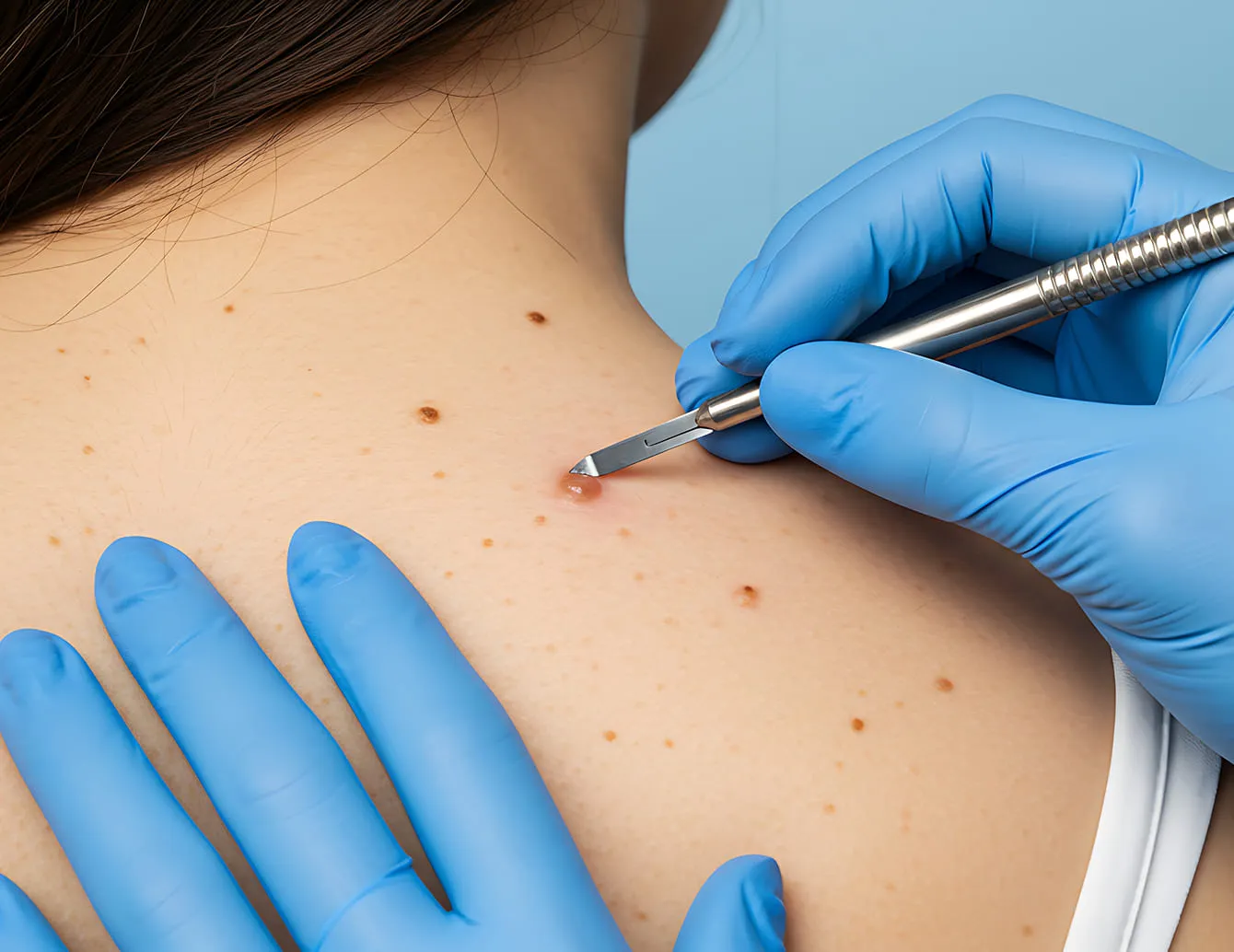
Skin cancer excision is a crucial procedure for removing cancerous lesions while preserving as much healthy tissue as possible. Early detection and precise treatment can make a significant difference in outcomes, ensuring both effective cancer removal and minimal scarring. Whether you have recently been diagnosed or require a professional evaluation, Dr. Hedayati offers the expertise and precision necessary for comprehensive skin cancer treatment.
Techniques used in skin cancer excisions
The technique used for excision varies based on the type, size, and location of the lesion. Dr. Hedayati typically utilizes two primary approaches:

Wide local excision
This standard surgical technique involves removing the skin cancer along with a measured margin of surrounding healthy tissue to ensure complete removal. The tissue is sent to a pathology lab for 'permanent section' analysis, with results confirming clear margins usually returning in several days. The area is closed with meticulous suturing techniques to optimize healing.

Mohs micrographic surgery
Often used for high-risk areas or cosmetically sensitive locations like the face, Mohs surgery allows for immediate margin assessment. Cancerous tissue is removed one layer at a time and examined under a microscope in real-time until all cancerous cells are cleared. This minimizes the removal of healthy tissue while providing the highest possible cure rate.
Frequently Asked Questions
Got any more questions?
Get in touch with usBasal cell carcinoma (BCC), squamous cell carcinoma (SCC), and melanoma can all be treated with surgical excision. In cases where the cancer is in a sensitive area or has unclear borders, Mohs surgery may be recommended for its added precision.
A biopsy removes a small sample of a spot to determine what it is. An excision removes the entire skin cancer along with a margin of normal skin to ensure it is fully treated. Usually, a biopsy is performed first for diagnosis, followed by the excision if cancer is confirmed.
The amount of skin removed is based on evidence-based guidelines for the specific type of cancer, its size, depth, and location. Dr. Hedayati ensures enough tissue is removed to clear the cancer while preserving as much healthy skin as possible.
Most wounds heal within 1 to 3 weeks. You will receive specific post-care instructions regarding wound care and activity restrictions. While initial healing is quick, the scar will continue to fade and flatten over the next 12 to 18 months.
Most patients can resume light activity within 3 days, but vigorous exercise or heavy lifting that might stretch the treated area should be avoided for 1 to 2 weeks to prevent the wound from reopening or the scar from widening.
As a fellowship-trained Mohs surgeon and dermatologic oncologist, Dr. Hedayati has performed thousands of excisions. His specialized training ensures not only that the cancer is removed completely but that the resulting reconstruction is handled with the aesthetic eye of a surgical expert.
Got any more questions?
Get in touch with us